-
When should a puppy have its first vet visit?
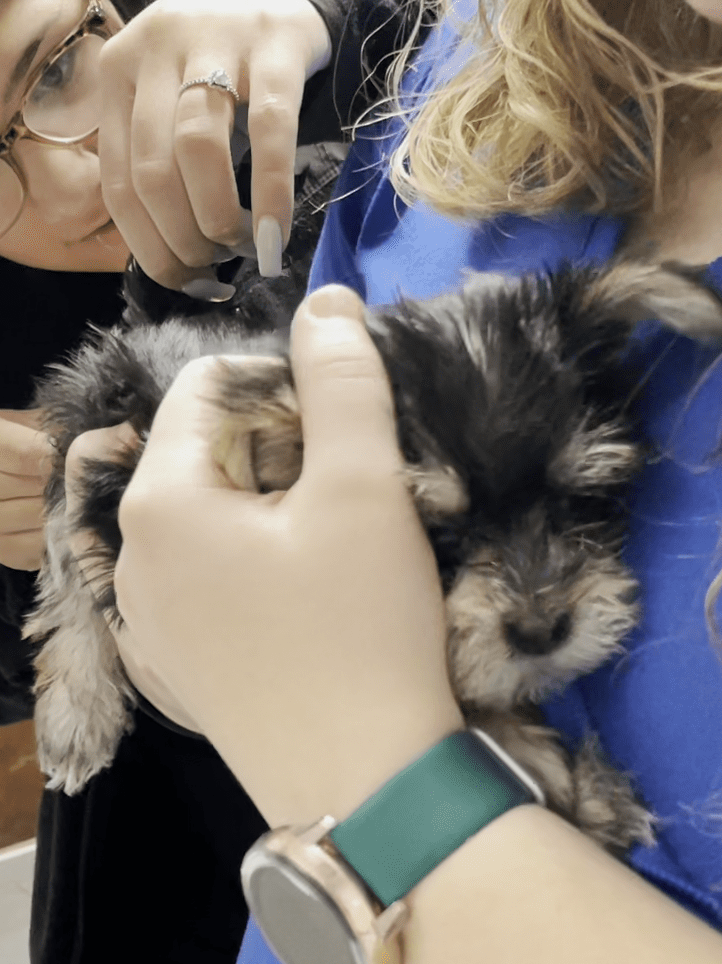
People vary on when newborn puppies should be dewormed – some say 2 weeks, some say 3. That can be done at the vet’s or at home. But the first vaccines should be done at 6 weeks. While you’re at the vet’s, they’ll go ahead and do an overall wellness check on your new puppies. This video includes what that was like for our newborn Silky Malti puppies and how they fared on their first trip to the vet.
What’s a #SilkyMalti? A Silky Malti is a designer toy dog breed: a Silky Terrier and a Maltese combined into one beautiful, loving bundle of fur. Both silkies and malteses are hypoallergenic toy breeds. Silkies are naturally intuitive, energetic, emotionally intelligent and sharp. Malteses are happy-go-lucky, playful, snuggly and attentive. Together, they make for lovely companions at home, out walking, on the road and more.
VIDEO 1: Prepping for a Small Dog Pregnancy – https://youtu.be/xDg8gLA6Jug
VIDEO 2: Toy Breed Labor & Delivery – https://youtu.be/FDyqpATEF34
Visit our website: silkymalti.com Follow us on Instagram: instagram.com/thesilkiestmillie Like us on Facebook: facebook.com/thesilkiestmillie 🐾 Check out our store for awesome dog tees and hoodies! https://bit.ly/silkymaltistore
-
Toy Breed Labor and Delivery
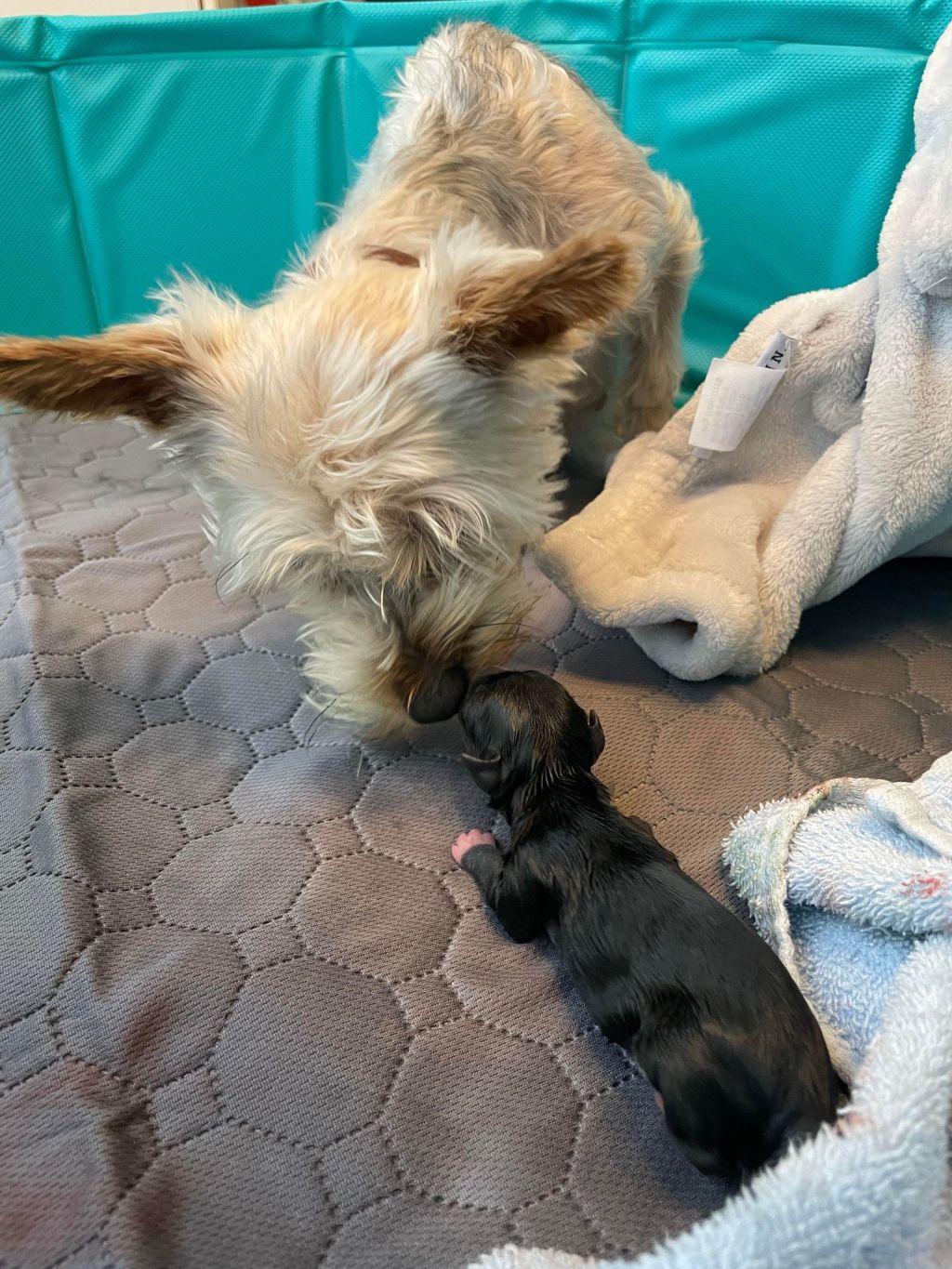

Millie, our Silky Terrier, had her pups (Silky Maltis – a mix of silkies and malteses) on a Saturday when I was home alone. Marc, my husband, was out at a conference. We thought the puppies wouldn’t be coming until the next weekend coming up so it seemed fine for him to take his trip (albeit on the heels of our honeymoon!). So I figured this would be a great weekend to prep Millie’s whelping area.
Whelping Area Prep
In this older home with plenty of renovation projects to do, the only feasible area that could work for whelping (breeder-talk for labor and delivery) was our unused kitchen dining area. It had a nice big bay window for plenty of natural light and the kitchen table that was there had just been given away. Since I knew (A) the puppies would spend their whole first eight weeks of life here before going to their “furever” homes and (B) we’d be taking lots of pictures and video in this area, I needed it to not only be puppy-ready but Instagram/internet-ready, too!
Items to do to prep the area included:
- Painting the walls
- Adding thermal curtains over the bay area windows (puppies can’t regulate their own temperature for weeks)
- Overlaying a temporary floor
- Installing a new vent cover (the old one was rusted and broken)
- Setting up her whelping pool and pads

BEFORE: painting in progress, flooring up next 
AFTER: Painting complete, floor complete, curtains 50% Signs my silky terrier was about to go into labor
As I was doing my whelping area work, I noticed a few things that made me think Millie might be whelping much sooner than expected. Her original date was supposed to be 4 November 2022. This was 29 October – six days earlier! Even so, I felt I was okay and Marc should be able to make it home in time to help, since these signs typically mean you still have 12-24 hours before whelping actually begins:
- Panting: Being such an athletic dog, I’ve very rarely seen Millie actually pant in her life. Not even after walks or during playtime. She was panting now with her tongue out and everything. Clue number one.
- Refusing food: I’d tried all her favorite foods as of late – peanut butter, ham, turkey, chicken. Normally, she’d be jumping up and down and salivating over these treats. I knew there was a problem when she wouldn’t eat those!
- Restlessness: She couldn’t seem to get comfortable no matter where she was.
- Discharge: She had some gooey discharge dripping out every now and then after peeing on her walk outside. Very slow to move as well. I was taking baby steps with her, almost like walking a very elderly dog.
- Dilated eyes: I could see her pupils seemed dilated – even without shining a flashlight on them.
- Nesting behavior: Occasionally, she would run upstairs and go to her favorite safe spot in the house – under our bed (it’s the place she would normally escape to when we weren’t home and she was scared). She was going under the bed and digging at the carpet – like she was trying to dig a hole. (Of course, I put a stop to that).
- Begging for attention: It was like she was pleading for me to stay by her, wanting to make sure I was with her. She wanted to be constantly petted and watched. But again, I thought I had at least 12-24 hours before any whelping started. With the back of my sticky floor hands, I tried to pet her here and there – still working to get her whelping area finished up.
- Contractions: The unmistakable sign of labor. I knew whelping was imminent when her contractions started. Her belly tightened up hard and she stuck her legs out straight each time. Never wincing, whining or howling. Just tensing up hard.
I texted Marc to let him know these puppies were going to be coming sooner than we thought.
Temperature Drop: Another sign to look for but that I couldn’t check yet was her temperature. It always drops prior to whelping. The whelping kit I’d purchased that included her thermometer wasn’t set to arrive until tomorrow! Still, I thought I must have some time. Maybe it would get here in time.
Finally, the floor was finished and I could let Millie try out her whelping spot: a plastic kiddie pool lined with circular, washable whelping pads and a few blankets for comfort. The only thing to add next would be the heat lamp, but I could do that later when the puppies were actually here, I thought.
As soon as the pool was set up, I picked up Millie who’d been in her bed for the past hour by me and placed her in her spot – just to let her try it out and get comfortable with it. As soon as I set her down, the “puppy bubbles” (as I call them – the amniotic sacs) began to emerge!

First “puppy bubble” (i.e. amniotic sac) to emerge. This is Nitro (aka MJ)! Puppy Arrival
Hooooooly heck, the puppies are already coming!! And the whelping kit wasn’t even here yet! Quickly I thought of what was in the kit that I could substitute for in the house:
- Towels: check
- Aspirator: little booger-sucker plastic device, check
- Clorox wipes: check
- Unwaxed dental floss to tie off umbilical cords (if needed): check
- Scale to weigh puppies: check (I used my kitchen scale for food)
- Notebook and pen to record puppy’s weight, time and date of birth, special identifying markings, etc.: check
- Heat lamp: check
I ran around like a mad-woman, flying around the house like a crazed Olympic sprinter trying to find all the items as fast as I could so I could get back to Millie. What else? That’s all I could think of at the moment.
I reminded myself of what my country born-and-bred dad said when I first told him Millie was having puppies. He’d been surprised that dogs needed an ultrasound (let alone an x-ray later to confirm litter size). “When I was growing up, we never even knew when the dogs were having puppies. They just went under the porch and came out with puppies!”
He was right about that. In the wild, dogs were very self-sufficient. They had their pups, cleaned the location themselves (even eating the placentas and all other evidence to get rid of as much scent as possible from predators), moved to safer, whelping-scent free den and raised their pups there. It’s just today with these small, toy designer breeds, sometimes these dogs need c-sections. Because in the wild, had the skulls been too big to pass through the pelvic bones of the mother, they all would have just died. And that would have been natural, too. So that’s why we do ultrasounds and x-rays, c-sections and more when we actually care for the pups and mom to live and thrive.
Whelping Process
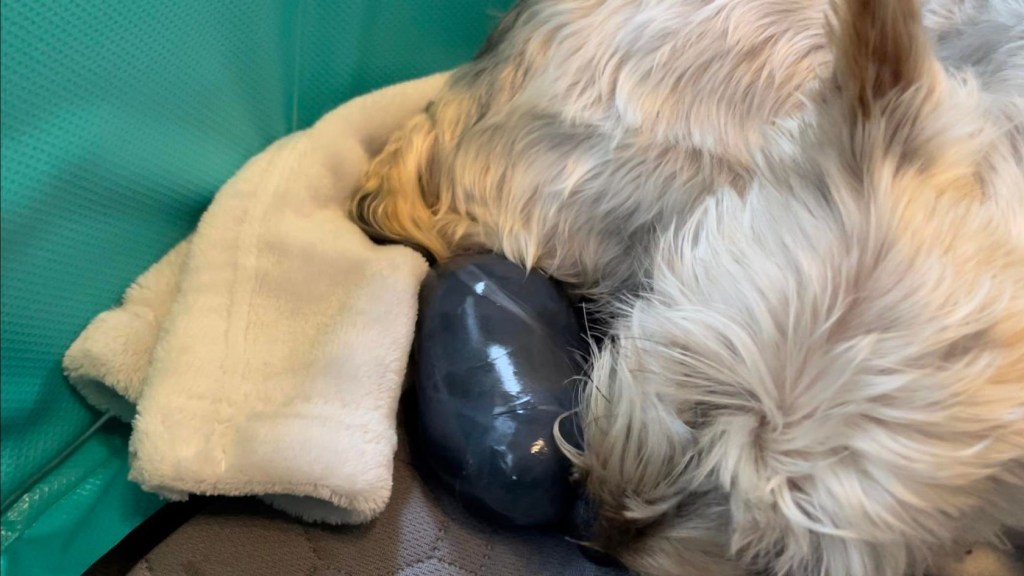
Puppies come out in these amniotic sacs. They’re surprisingly dry to the touch! Placentas follow afterwards. Mom is designed to do all the work – as she would have in the wild to ward off predators. She tears open the sac, gets rid of all evidence as best she can (which includes eating the placenta and umbilical cord – cutting it herself with her teeth) and licking the pups clean. Clean puppies then make their way over to her nipples to nurse.
While it seems gross to us humans to have the mom eat the amniotic sac, placenta and all the leftovers, it’s actually fairly genius by design for dogs. The sac contains hormones that help her with milk production and her eating it inverts it upwards, letting any final nutrients and other good stuff for the pups pass through the umbilical cord before she removes it. The puppies nursing her also aid in her contractions to birth the other pups.
All of this generally happens without you, but the parts you’ll want to be prepared for are:
- Umbilical Cords: Helping mom cut off the umbilical cord if needed (likely not). If so, you’d want very blunt scissors for this, not razor sharp scissors.
- Placentas: Throwing away the placentas if she doesn’t get rid of it (only had to do that with the first one for her).
- Crying and Drying: Using your suction tool to clear the nose and mouth airways as best as possible. Gently drying and rubbing the pup with a towel in your hands to try to warm it up and get it to cry is also helpful if mom is pre-occupied.
- C-Sections: Thankfully, we didn’t have to do this and – generally – this is what the x-ray is for ahead of time. (I still don’t know why it’s fine to x-ray pregnant dogs when it’s not fine to x-ray pregnant humans, but let me know if you know that answer in the comments below!). Not only does the x-ray show puppy count, but the size of the skulls can be measured against the size of her pelvic opening. If the skulls are clearly bigger, then a c-section definitely needs to be carefully planned as not to take the puppies too early. Luckily, Millie’s pups seemed to be fine to not have a c-section, but I still kept a close eye on her to see if she might be struggling and pushing for a long time to no avail. Thankfully, that didn’t happen for us.
- Caring for mom: Another thing you can do is care for mom in this process. She’ll be tired. She’ll need breaks sometimes. She may want lots of petting and attention (which ours did). And you’ll want to just clean her with a warm rag when you have the opportunity. Ours got pretty messy with a sac breaking under her leg once and her whole bottom half was wet on one side with fluids. They say you shouldn’t give mom a bath for a few days afterwards, but you can at least wipe her down.

MJ still in his amniotic sac prior to breaking (I helped her break this one) 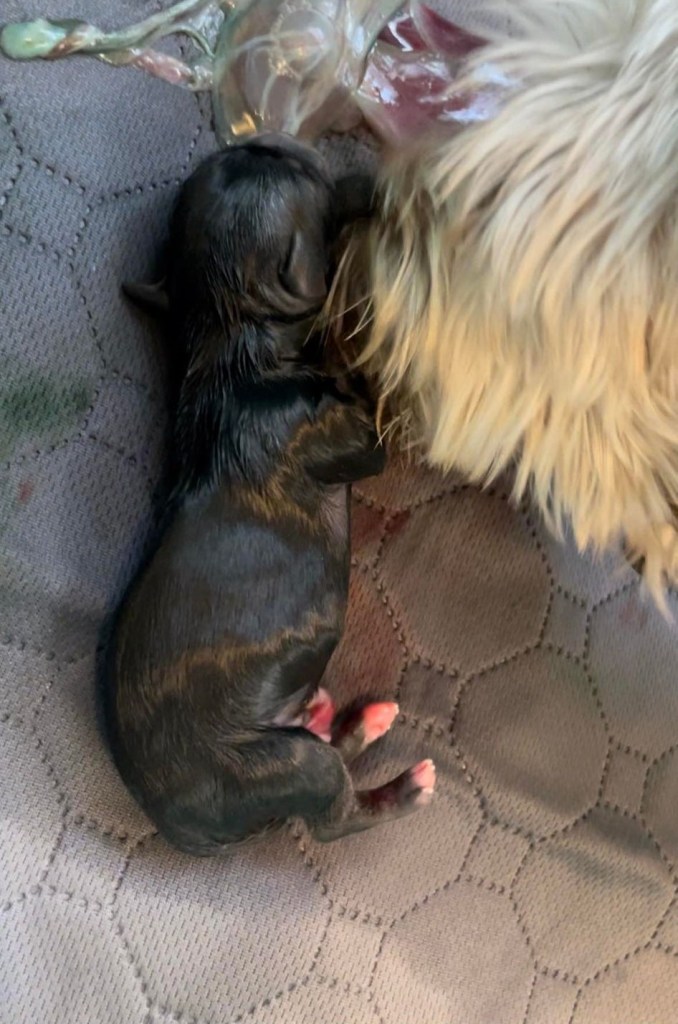
First pup MJ – freed from his amniotic sac 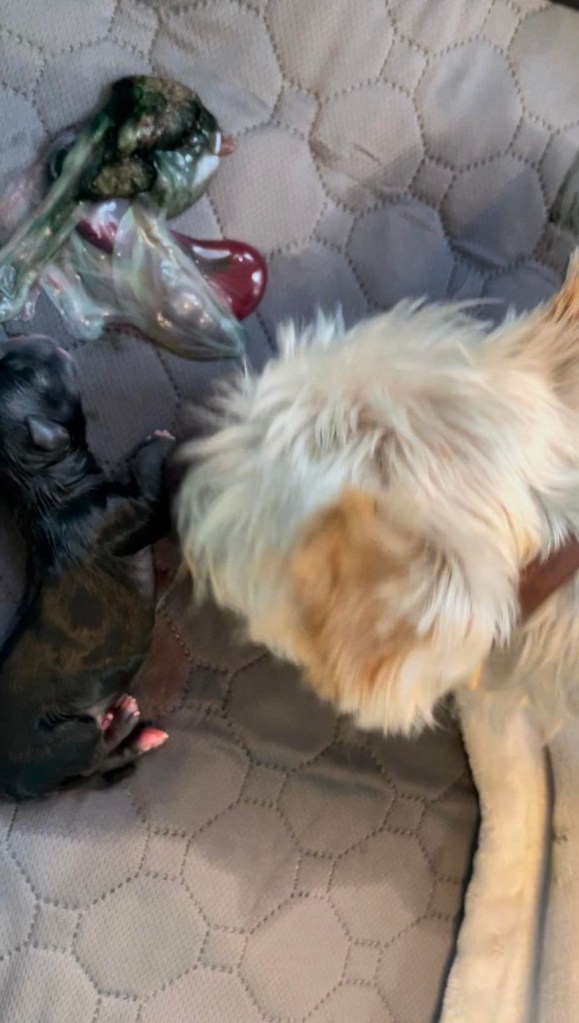
MJ’s placenta that I ended up having to throw away 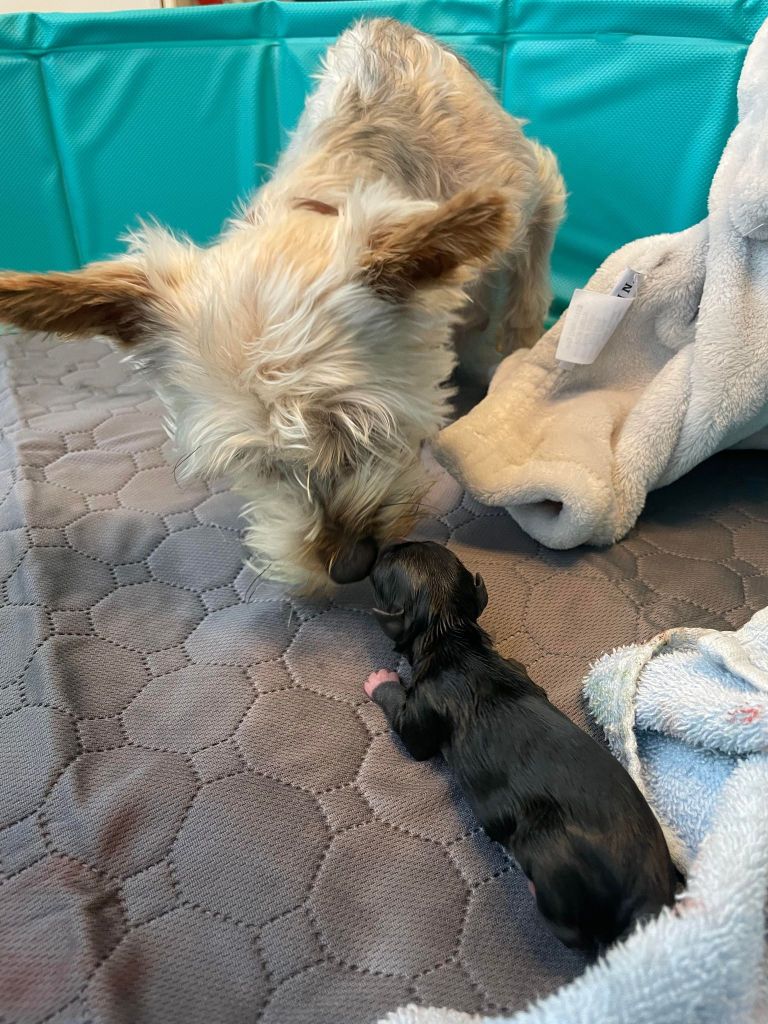
Millie gets to meet her first pup! 
First pup nursing 
Three pups nursing! 
Millie prior to wiping down, having contractions to push out puppies four and five. 
“Sun bathing” – first three pups enjoying the heat lamp. Millie’s contractions started around 1pm that day. The first puppy arrived around 3pm and the final puppy made it into the world successfully around 10pm at night. Marc made it home just in time to see that final puppy arrive. The final pup was originally named “Peaches” for the color of her ribbon and her new litter nickname is Crèma.
At the time of writing this, the puppies are currently four weeks old and doing well! You can check them out at silkymalti.com, on Facebook at The Silkiest Millie and on Instagram at @thesilkiestmillie. See you around!

Visit silkymalti.com to learn more about our pups!
-
Toy Breed Pregnancy and Prep
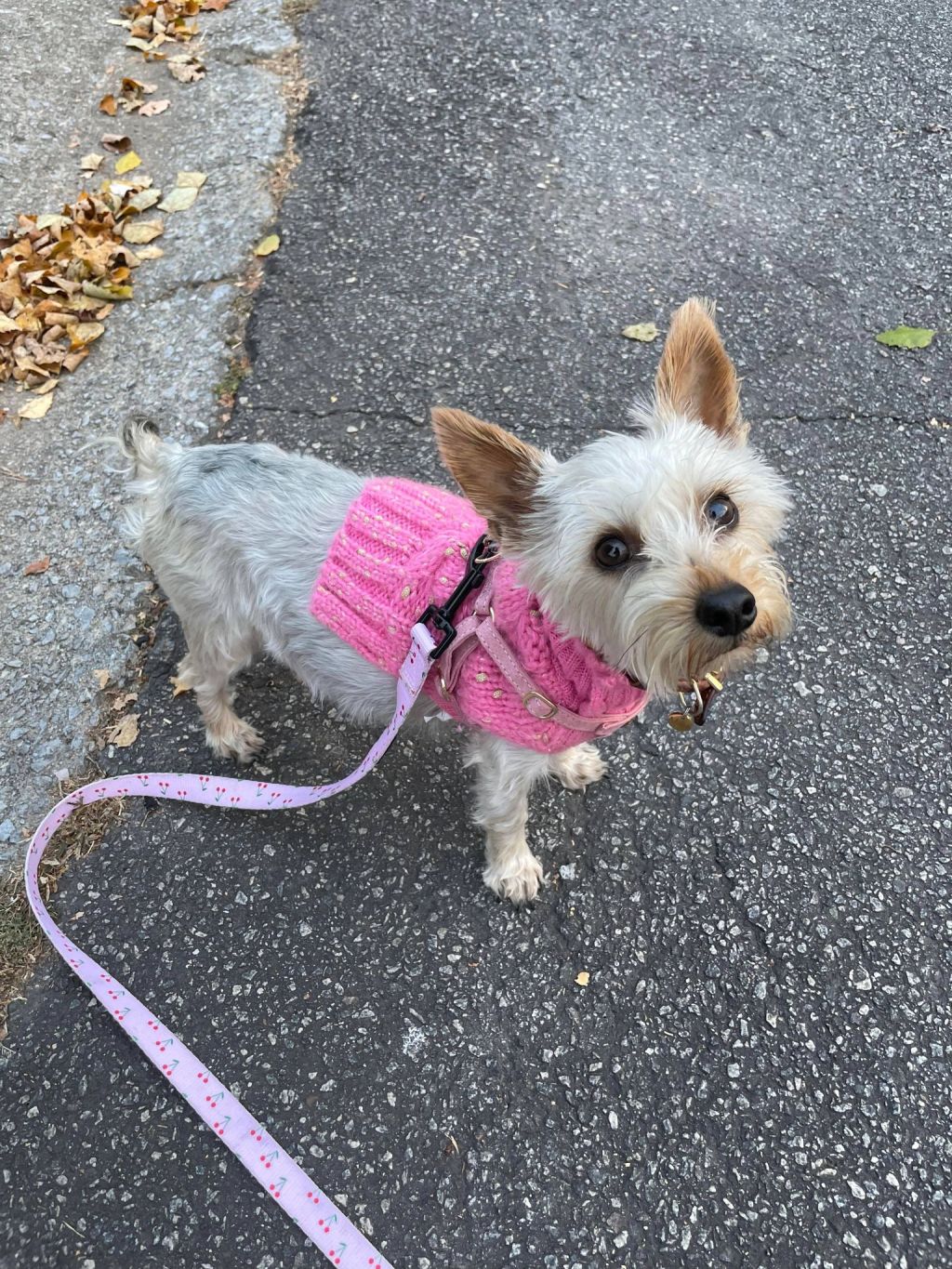
Our silky terrier Millie (better known as @thesilkiestmillie in social media world) got pregnant while I was away at my Leadership Cobb Fall Retreat this past September. My husband Marc and I agreed – after much debate – that she could have puppies at some point, but we were not thinking this early – nor could the timing have been any worse.
Watch the YouTube version of this blog: Prepping for a Small Dog’s Pregnancy A conundrum to sort
We were slated to go to Barcelona, Spain for our delayed honeymoon – having gotten married last year while COVID was still so highly unpredictable. So we decided we’d take our honeymoon as our anniversary trip and opted for a mini-moon instead (made a whole video about that one – it was rather fun!). In any case, if you didn’t know, the gestation cycle of a dog is particularly short – only 63 days to be exact. That’s just a blinking two months!
Marc is the kind of guy who’s worked real hard his whole life and also doesn’t bother to plan trips for himself very much. So the fact that we pulled off this Spain trip while he had his fulltime job as an architect and I had my more than fulltime venture as an entrepreneur is none short of amazing. He told me if we didn’t take this trip, that the odds that we would ever go would be slim to none. Great.
Luckily, the lady who recently started walking Millie and Vanilli turned out to have experience in watching small pregnant toy breeds as well. A friend of hers breeds her yorkie and our sitter often watches her dog for her while she’s out of town. The angels rejoiced! PERFECT situation for us. It was the only way I could remotely enjoy the trip without incessantly worrying about Millie. Vanilli (aka Fluffy) would be fine at another sitter – since pregnant dogs should be away from other dogs for the last three weeks before whelping (labor) and for an additional three weeks afterwards when the puppies are born.
Pregnancy & Whelping Prep
Now that that was all sorted, here’s how we set about prepping for the remaining weeks of Millie’s pregnancy and whelping:
NUTRITION
Nutrition while Millie was pregnant proved challenging – but not impossible. I’ve never had kids, but I do know pregnant women’s palettes can change drastically. What used to be tasty before no longer is. You can get pica (cravings for odd mineral-tasting things like clay and ice) and what you really want can be an elusive target from day to day. Millie was exactly like that. Thankfully, I picked up a few tips from other breeders on what works when your pregnant dog no longer wants their regular kibble. The answer became plain chicken (ideally warmed up) with rice, a bit of chicken broth mixed in with the nutrient-packed kibble. Post pregnancy nutrition proved even more challenging – which you should read about in our upcoming Week One of Newborn Puppies blog. Other items that worked pre-whelping include:
- Boiled / scrambled eggs
- Turkey slices
- Turkey sausage slices
- Steak slices
…you get the idea. Gone are the days of plain old boring kibble. Bring on the tasty people food!
VET VISITS
We had two vet visits in prep for this litter:
ULTRASOUND VISIT: The ultrasound was possible around the late 20ish day mark. However, as it’s not 100% reliable (i.e. sacs of puppies can be missed on the ultrasound, especially with such tiny puppies), the next step of an x-ray would be necessary. On Millie’s ultrasound, our vet thought she spotted three puppies.
X-RAY VISIT: The x-ray visit took place in the late 50ish day mark, close to whelping. I still don’t know why it’s fine to x-ray dogs when pregnant women are warned ad nauseum not to be x-rate whatsoever at any stage of pregnancy. It’s a good thing we actually did the x-ray – as on this visit, we spotted not three but FIVE puppies! You count them by the spines and skulls you can see. It’s important to know the closest final number you can – just to ensure every puppy makes it out and every corresponding afterbirth (placenta) also makes it out. Quite important – as you can imagine. The other important reason: to gauge the size of the puppies skulls in relation to the pelvic opening of your dam (i.e. mom). Heads that are too big for the space means she is in serious likelihood of needing a c-section – something that’s best prepared for in advance (both from a timing standpoint – extremely critical – and a financial standpoint). Thankfully, it didn’t look like Millie would need one, but we had our emergency vet on standby just in case.
Can you spot all five silky malti pups in the x-ray images below?
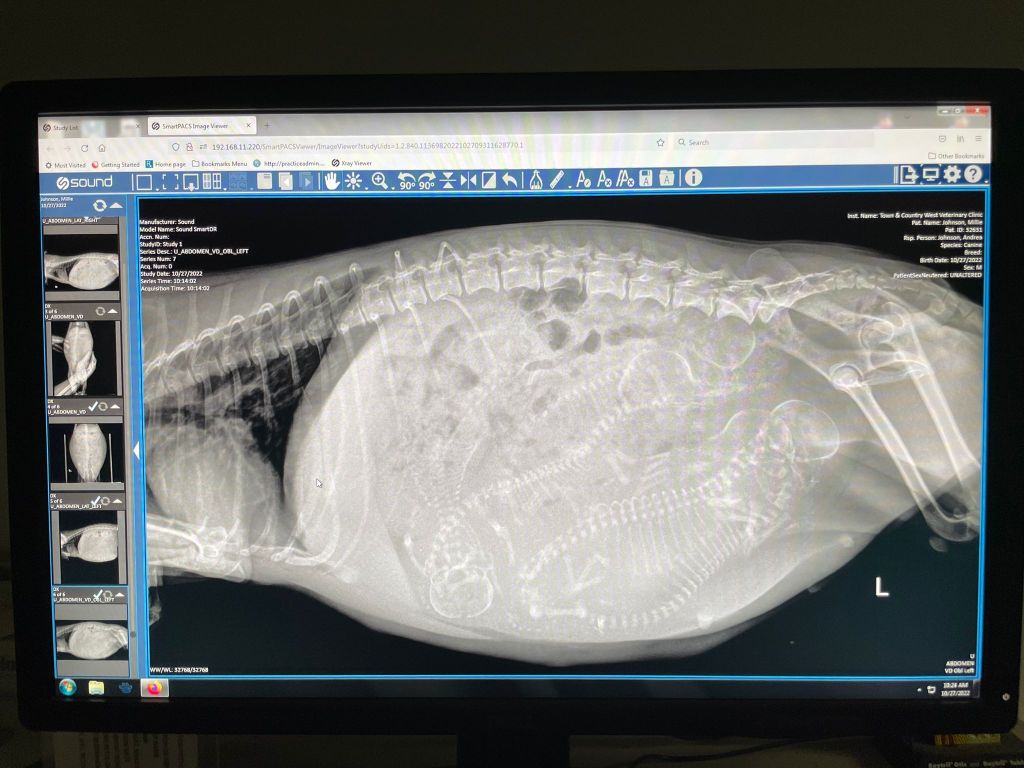
Side view x-ray of Millie’s puppies 
Front view of Millie’s pups WHELPING AREA
I’d just moved into Marc’s house during the pandemic and it had a lot of renovation projects in the works: a back door to be replaced, kitchen to refurbish, TV to be mounted – the list went on and on. Where on earth in this already packed house could we feasibly house these puppies? The only place that made sense was the open kitchen dining area we don’t use yet. So I made some quick renovations to the place just to make it nice for Millie and the puppies: an update to the flooring, painting and window treatments gave the space new life. Just what it needed!
One Saturday morning, I set out to get the bay window area painted and start on the flooring when I started to notice some new behavior from Millie. Ultimately, I discovered she was already having her puppies – six days early! You can read about that interesting adventure in the upcoming Toy Breed Labor and Delivery blog post.
In addition to prepping the area, there were some supplies to obtain:
- Whelping Kit: includes things like puppy ID collars (although I knew most kits’ collars would be too big for our tiny pups), a thermometer, different types of bottle feeders, alcoholic wipes and more.
- Scale: to weigh the puppies both at birth and everyday / week afterwards.
- Notebook: to record weights and other important notes, like ENS (early neurological stimulation) treatments.
- Birthing Sheets: to record the birthing date and times, any unique markings on the puppies (what they are, what color and where they are), etc.
- Thermal Curtains: Since there’s a big bay area in that room, I thought it would be appropriate to get some curtains to better control the room’s temp (see the heating lamp point below).
- Towels and Whelping Pads: because labor (i.e. whelping) is messy, there would be lots of fluids to catch and clean.
- Heating Lamp: puppies actually can’t regulate their own temperature at birth – and they won’t be able to do it for several weeks after birth either. Additionally, they can’t see or hear. All they have when born are two senses: smell and touch.
- Swimming Pool: the less expensive alternative to the $300-400 whelping areas you can get online on Amazon and otherwise. If we had time, we could have built one as well, but that wasn’t an option at this point. So a shallow small kiddy pool would definitely do the trick.
There were plenty of things in the whelping kit in particular that actually weren’t needed when it came down to it.
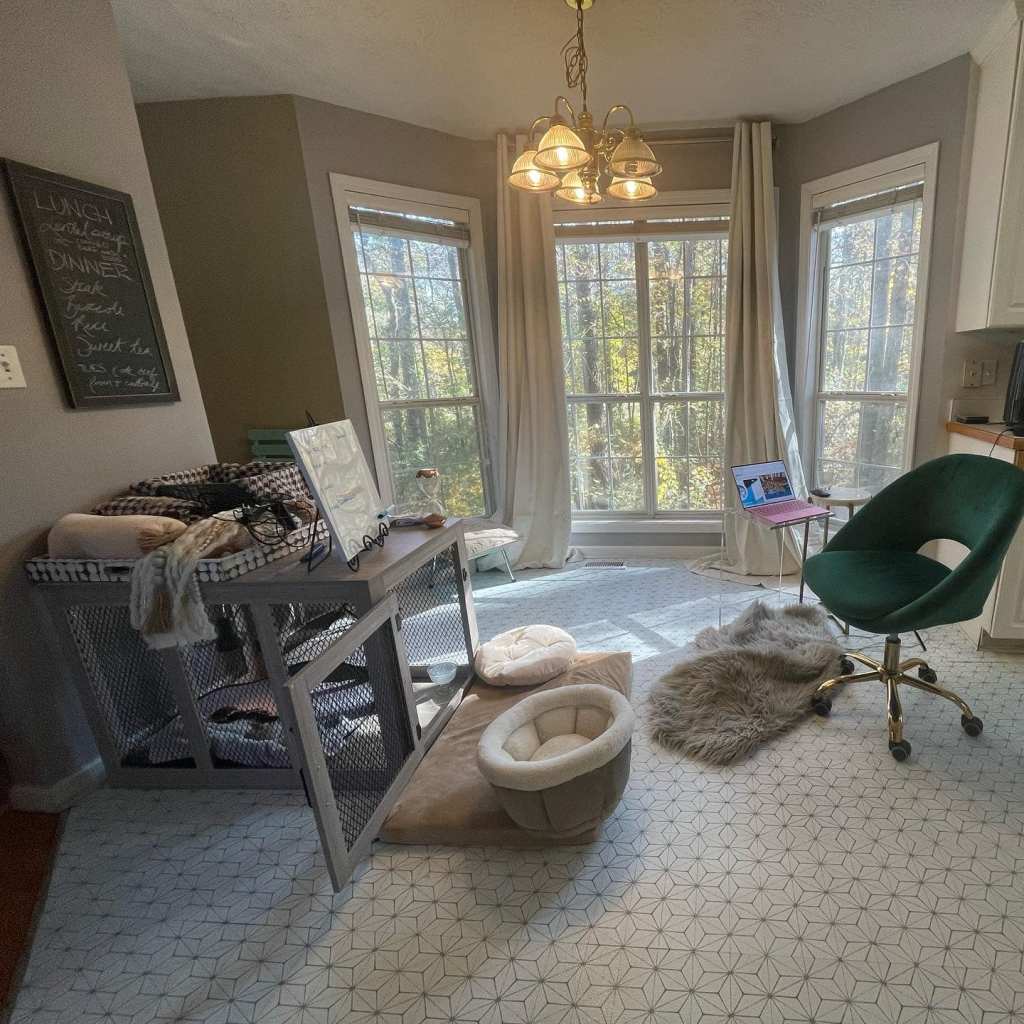
Room setup after whelping. This will morph again once the puppies can walk and crawl farther than six inches. Check out the Week One Blog to see what life was like for the puppies (and me / us) afterwards. PUPPY PREP
This being our first (and potentially final?) litter ever, I was quite excited to prepare for them. In addition to their whelping area, nutrition and pregnancy prep, I also managed to find some cute newborn puppy caps for them to wear in photos at some point along with some other fun photo op props. I also tried some yarn as ID collars (since I was certain, again, that the ID collars in a whelping kit or otherwise would prove to be too large) – but it turns out that their markings are enough to differentiate them. Still, the yarn bows make for lovely, sweet photos and that’s enough for me!
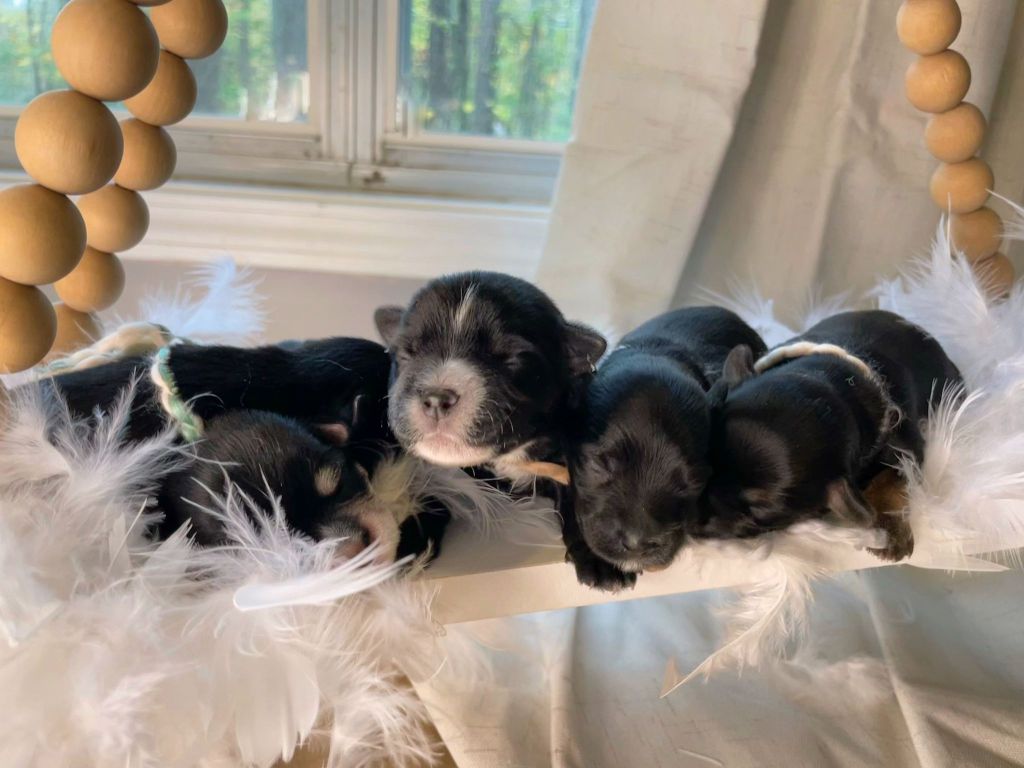
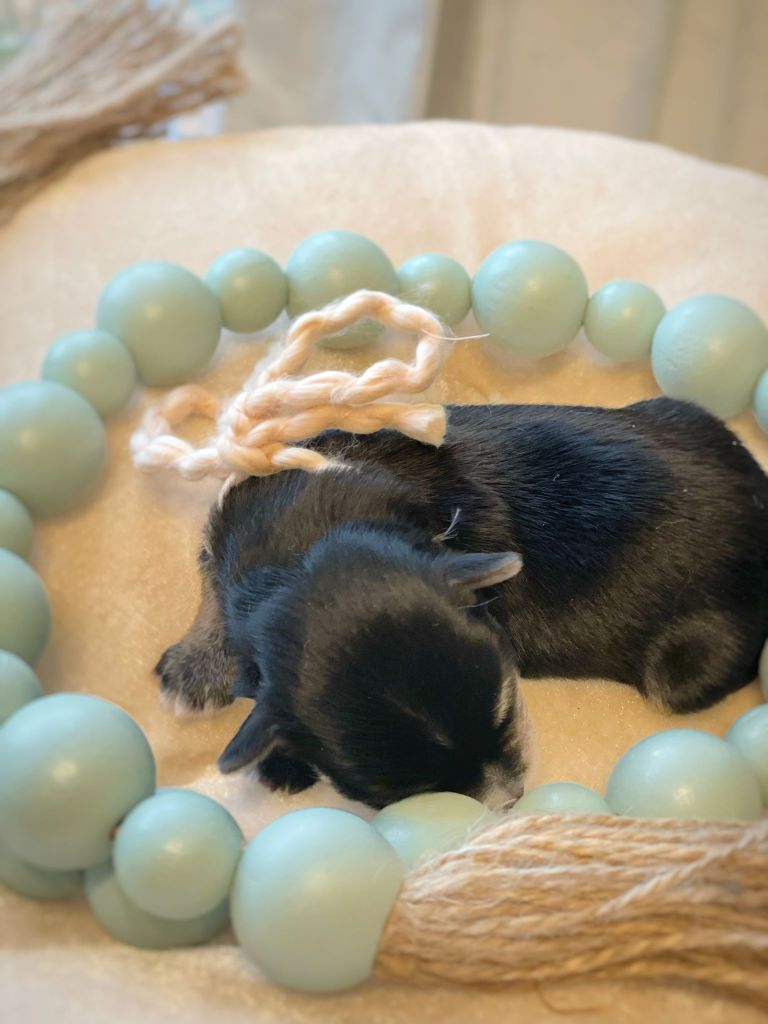
Overall, there’s a lot to prepping for a pregnant dog – especially a small breed one. There’s a lot of truth to what my dad alluded to – that dogs pretty much handle their pregnancy all by themselves. But I was glad we were prepared should we need to step in at any point for the life of the mom and pups. So grateful for a safe whelping session (albeit a long one)! Check out the labor and delivery blog post to learn what that was like!
What are your ideas on how to prepare for new pups?
 SILKY MALTI BLOG